English
  日本語
日本語  français
  Deutsch
  Español
  italiano
  русский
  português
  العربية
  magyar
  Ελλάδα
inquiry@ljzcncmachining.com

In 2026, buyers sourcing brass milling overseas face a risk that does not show up at incoming visual inspection: parts that look correct but fail in service due to wrong alloy composition, inconsistent hardness, or mixed-lot material that machines differently across batches and tarnishes unpredictably in the field.
When working with china machining brass suppliers, the sustainable cost advantage comes from verification — locking alloy specifications, traceability, and inspection controls before scaling production. This guide provides a practical, audit-ready framework for buyers who need both cost efficiency and material reliability.
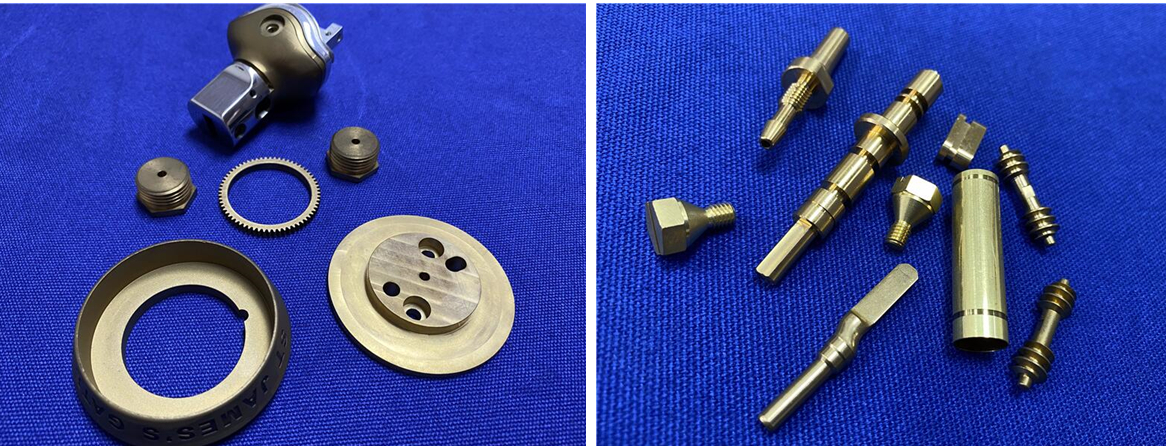
The most expensive brass sourcing failures are not visible until after production has scaled. By the time the failure mode is identified, multiple lots may already be in the supply chain.
| Failure Pattern | How It Appears | Business Consequence |
|---|---|---|
| Wrong alloy delivered | Appears identical visually; different machinability and corrosion behavior | Scrap at assembly; early field failures; warranty claims |
| Mixed lots | Dimensional drift mid-run; inconsistent surface finish across batches | Rework; inspection holds; delayed shipments |
| Inconsistent tarnish behavior | Different oxidation rate across parts in the same assembly | Cosmetic rejections; customer complaints |
| Unsupported compliance claims | No documentation for lead content or water-contact suitability | Market access failure; regulatory liability |
| Batch substitution without notification | Supplier changes bar stock source; no change-control communication | Unexpected machining variation; repeat process qualification |
These failures share a common cause: material authenticity treated as assumed rather than verified. Brass is a copper-zinc alloy family, and "brass" without a grade specification covers a wide range of compositions with meaningfully different machinability, hardness, and corrosion characteristics. The correct approach treats material authenticity as a process control, not an implicit guarantee.
Define the exact grade and standard before any quote is requested. Common brass grades used in machined parts include:
| Grade | Composition Basis | Typical Application |
|---|---|---|
| C36000 (Free-Cutting Brass) | Cu 60–63%, Zn remainder, Pb 2.5–3.7% | High-volume machined fittings, connectors |
| C26000 (Cartridge Brass) | Cu 68–72%, Zn remainder | Formed and drawn parts; lower lead content |
| C38500 (Architectural Bronze) | Cu 55–59%, Zn remainder, Pb 2.5–3.5% | Decorative and hardware applications |
| Lead-free brass variants | Bismuth or silicon substitutes for Pb | Water-contact applications in lead-restricted markets |
Specify the grade designation, applicable standard (ASTM, EN, or GB equivalent), and the acceptable chemistry range for the application. For water-contact applications in markets with lead restrictions (NSF, WRAS, ACS), specify the required compliance standard explicitly.
Require heat and lot number tracking from bar stock to finished parts. A supplier with genuine traceability can tell you which bar stock lot was used for a specific production run, and can provide the mill test certificate (MTC) for that specific lot.
Traceability is not:
A generic material certificate that applies to a range of products
A claim that "we always use C36000"
A datasheet PDF with no lot reference
Traceability is:
A lot number on the MTC that matches the lot number on the production record and on the outgoing inspection report
Require a mill test certificate per material lot with every order. The MTC should include the specific heat or lot number, chemical composition by element with actual measured values, mechanical properties where relevant, the issuing mill's name and stamp, and the production date.
Review the MTC against the specified composition range before production begins. An MTC that shows composition within specification is one verification layer. An MTC that cannot be matched to a specific lot in production is not a control — it is a document.
For new suppliers and for orders where alloy authenticity is high-consequence, spot-check composition on incoming bar stock using XRF (X-ray fluorescence) analysis. XRF provides a fast, non-destructive elemental reading that can confirm whether the material matches the specified grade before it enters production.
XRF does not replace MTC documentation — it supplements it. For established supplier relationships with consistent MTC history, XRF verification frequency can be reduced to periodic audit sampling rather than 100% incoming inspection.
Require a written commitment that any change to material source, bar stock grade, or processing parameters triggers advance notification before the changed material is used in production. Silent substitutions — where a supplier switches bar stock supplier or grade without informing the buyer — are one of the most common and hardest-to-detect causes of batch inconsistency.
Implementing these material controls produces measurable operational improvements that offset the documentation and verification overhead.
| Metric | Improvement Mechanism | Expected Direction |
|---|---|---|
| Scrap rate per lot | Consistent alloy = predictable machining behavior | Decreases |
| Tool wear rate | Stable machinability reduces unplanned tool replacement | Decreases |
| Cycle time variance | Same material = same feeds and speeds perform reliably | Decreases |
| Burr rate | Consistent composition and hardness = predictable chip formation | Decreases |
| Incoming inspection pass rate | Verified material reduces surprise composition failures | Increases |
| Surface finish consistency | Same alloy = same finishing behavior across batches | Increases |
| Lead time reliability | Fewer quality holds reduces delays | Improves |
The ROI calculation is straightforward: compare the cost of MTC documentation, pilot lot testing, and periodic XRF verification against the cost of one failed production lot — scrap, rework, delayed assembly, and any customer-facing consequence. For most production programmes, the verification cost is recovered within the first two to three reorder cycles.
Provide: 3D CAD in STEP format, 2D drawing with all tolerance callouts, brass grade and standard specification, surface finish requirements (including any anti-tarnish or cosmetic requirements), target annual volume, and application context (operating temperature, corrosion exposure, any regulatory requirements).
Before approving any production run, confirm receipt of: the specific brass grade and standard the supplier will use, an MTC example from a recent lot of the same material, the supplier's traceability method (how lot numbers are maintained through the production process), and written change-control terms.
Produce one lot only. Define in writing before the pilot starts: dimensional acceptance criteria for all CTQ features, surface finish acceptance standard, composition verification method, and what constitutes an acceptable result. Retain a sample lot from the pilot as the reference for future reorders.
Establish inspection gates appropriate to your risk level:
| Inspection Gate | Frequency | What It Checks |
|---|---|---|
| Incoming material verification | Per lot (or periodic audit for established suppliers) | MTC review + XRF spot check |
| First-article inspection | Per production run | Full dimensional check against drawing |
| In-process check | Per batch at defined intervals | Key dimension + surface condition |
| Pre-shipment inspection | Per lot | Dimensional AQL + visual + packaging condition |
Lock the reorder requirements: same alloy source and grade, same inspection plan, same labeling and lot tracking format, and written confirmation from the supplier that no material or process changes have occurred since the approved pilot. These rules should be part of the purchase order terms, not assumed.
Which brass grades do you stock, and can you provide an MTC per heat or lot for each material we order?
How do you maintain lot traceability from bar stock receipt through machining to outgoing inspection?
Have you supplied brass milling parts for water-contact or regulated applications before, and can you support the required documentation?
What is your milling tolerance capability for the key dimensions in our drawing?
How do you control burr formation on cross-drilled holes and internal features?
What is your approach to surface finish consistency across a production lot?
How are lots separated and labeled in your production area?
What format are your inspection reports in, and do they reference the specific lot number?
Do you retain samples from production lots, and for how long?
What anti-tarnish packaging options do you offer for brass parts with cosmetic requirements?
How are parts protected from contact damage and moisture during packing and transit?
What is your change-control policy if you change bar stock supplier or processing approach?
What is your rework policy for dimensional non-conformances identified after delivery?
Q1: What is brass milling and how does it differ from other brass manufacturing processes?
Brass milling is CNC machining that removes material from brass bar stock or plate using milling, turning, and drilling operations to produce parts with precise dimensions and controlled surface finish. It differs from casting in that milled parts achieve tighter tolerances and do not require tooling for geometry changes — making it better suited for low-to-mid volumes and designs still in iteration. It differs from forming in that it is subtractive rather than deformative, allowing complex internal features that forming cannot produce.
Q2: How is brass milling different from brass casting for a given production application?
Milling is the better choice when tolerances are tight (typically below ±0.1 mm on critical dimensions), when production volume is under 5,000–10,000 parts per year where casting tooling cost does not amortise well, and when part design is still evolving. Casting becomes more cost-effective at high volumes on stable designs but requires significant upfront tooling investment and typically needs more post-machining finishing to achieve the same dimensional accuracy as a milled part.
Q3: How does material authenticity verification improve ROI on brass machining orders?
Material composition directly affects machinability — a free-cutting brass like C36000 machines at significantly higher speeds and with lower tool wear than a general-purpose brass that a supplier may substitute. When composition varies between batches, feeds, speeds, and tool life all vary with it, creating cycle time variability, higher scrap rates, and inconsistent surface finish. The cost of verifying composition through MTC documentation and periodic XRF spot checks is typically recovered within two to three production lots through reduced scrap, rework, and tool consumption.
Q4: What should I measure during a brass milling pilot run to validate a new supplier?
Track: XRF composition result versus the specified grade and chemistry range, scrap rate on critical dimensions, burr rate on cross-drilled and intersecting features, surface finish measurement on cosmetic faces, cycle time stability across the production run, and tarnish behavior on a subset of parts stored under representative conditions for two to four weeks. These metrics provide the objective basis for confirming whether the supplier's material and process controls can support reliable scaled production.
Q5: What information do china machining brass suppliers need to provide an accurate quotation?
Provide: 3D CAD file in STEP format, 2D drawing with all tolerance callouts highlighting CTQ dimensions, brass grade and standard specification, surface finish requirements including any cosmetic or anti-tarnish requirements, threading or secondary operation requirements, quantity forecast for prototype and production, and any regulatory or documentation requirements (MTC format, composition range, compliance standards for the target market). Suppliers with complete information can provide accurate quotations with appropriate process plans — incomplete inquiries generate conservative quotes that overestimate cost.
The fastest way to de-risk overseas brass milling is to treat material authenticity as a controlled process: lock the grade, require lot-traceable MTCs, verify composition on pilot and audit lots, and establish written change-control terms before scaling. With these controls in place, china machining brass sourcing can deliver consistent cost efficiency and reliable batch-to-batch repeatability across every production cycle.
 日本語
日本語